2026-09-02 · Dave Olson
Why Spring Snowmelt Floods Twin Cities Basements While the Ground Is Still Frozen
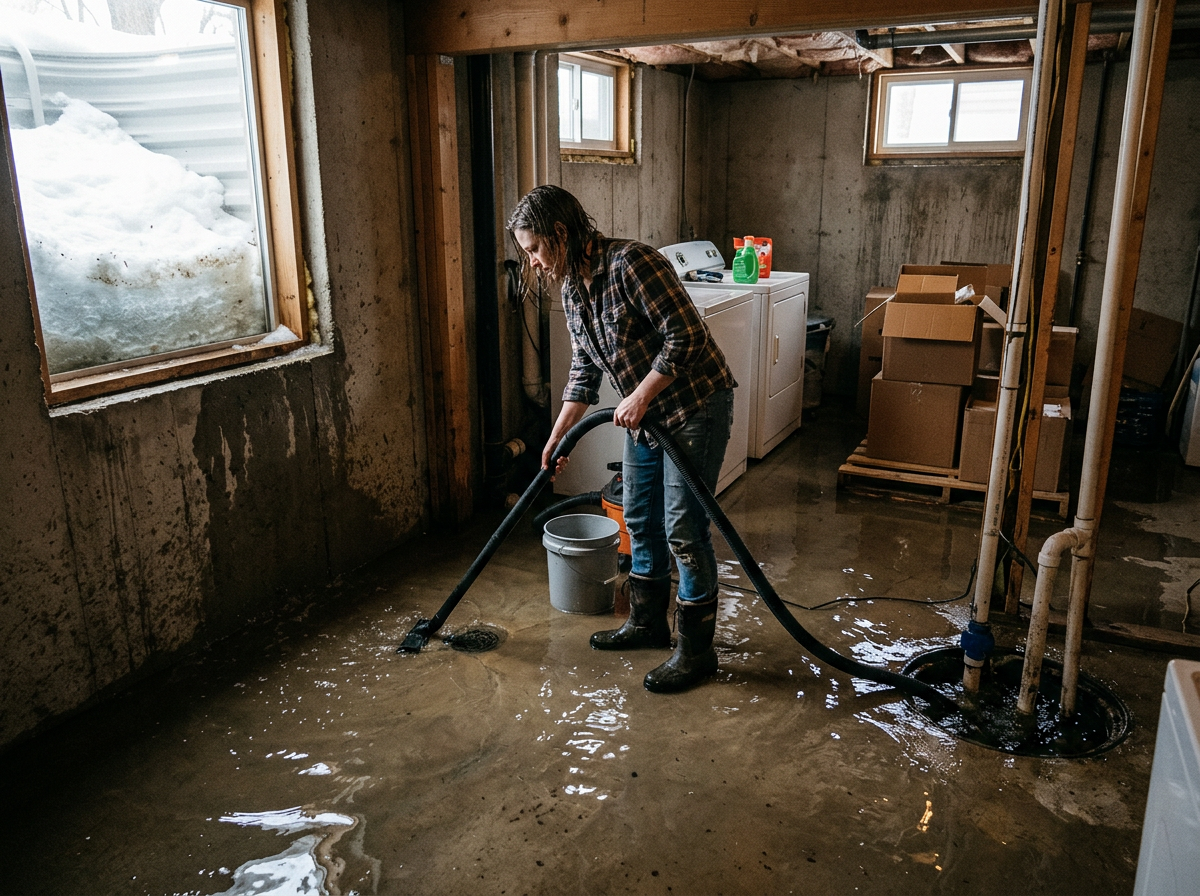
Spring snowmelt reaches Twin Cities basements while the ground stays frozen because 42-60 inches of frost keeps soil impermeable, forcing water across the surface instead of soaking in. Heavy clay soils common here speed the runoff, and March-April temperature swings turn packed snow into sudden volumes that older combined sewers and sump systems cannot handle quickly enough.
How Frozen Ground Channels Meltwater
Frost locks the top several feet of soil from late fall through early spring, so any melt from warming days has nowhere to go except laterally across yards and driveways. In Minneapolis and Saint Paul this means water pools against foundation walls exactly when sump pumps work hardest. Clay soils hold even less capacity than sandy areas farther south, turning normal spring precipitation plus snowpack into concentrated flow that finds every gap. Homeowners often notice the first signs after a string of days above 40 degrees followed by a quick freeze that seals discharge lines.
Sump Discharge Lines and Ice Blockages
Many Twin Cities homes route sump discharge outside, yet those lines freeze solid when overnight lows stay below 20 degrees even as daytime melt continues. Once the line ices shut, water backs up inside the pit and overflows onto the floor. Clay soils around the foundation add pressure by directing more volume toward the house. Checking that the discharge ends several feet from the wall and stays clear of snow piles prevents most of these backups before they reach the basement slab.
Entry Points Through Block and Poured Foundations
Older Minneapolis and Saint Paul homes with block foundations allow water to travel through mortar joints once exterior pressure builds from standing melt. Poured walls tend to crack at cold joints or around pipe penetrations, letting the same surface water enter wall cavities. The block versus poured foundations article explains how each type fails differently under spring loads. Ice dams on the roof can push additional water behind siding and into those same cavities, compounding the problem.
Insurance Distinctions Between Seepage and Sudden Loss
Minnesota policies usually cover sudden events such as a pipe burst or appliance failure but treat groundwater seepage as an uncovered maintenance issue. When melt enters slowly through cracks over several days, adjusters often classify it as seepage. Documenting a rapid rise after a known heavy melt day or a clogged sump line can shift the claim toward covered sudden loss. Homeowners in areas with combined sewers sometimes see backup coverage triggered if municipal lines surcharge during peak runoff.
After water appears, prompt water extraction followed by structural drying keeps damage from spreading into subfloors and framing. Typical drying in these conditions takes 5-10 days at 40-50 percent indoor humidity with consistent airflow. The ice dams article outlines checks for hidden wall moisture that often accompanies spring events.
Practical step: photograph any standing water and note the date and temperature pattern before moving items. Contact a local basement flood cleanup team that understands frost-depth runoff patterns rather than waiting for visible mold. Early extraction and targeted drying limit both repair scope and the chance of later disputes over coverage.