2026-09-02 · Dave Olson
Ice Dams and Water Inside Your Walls: What Minnesota Homeowners Should Check
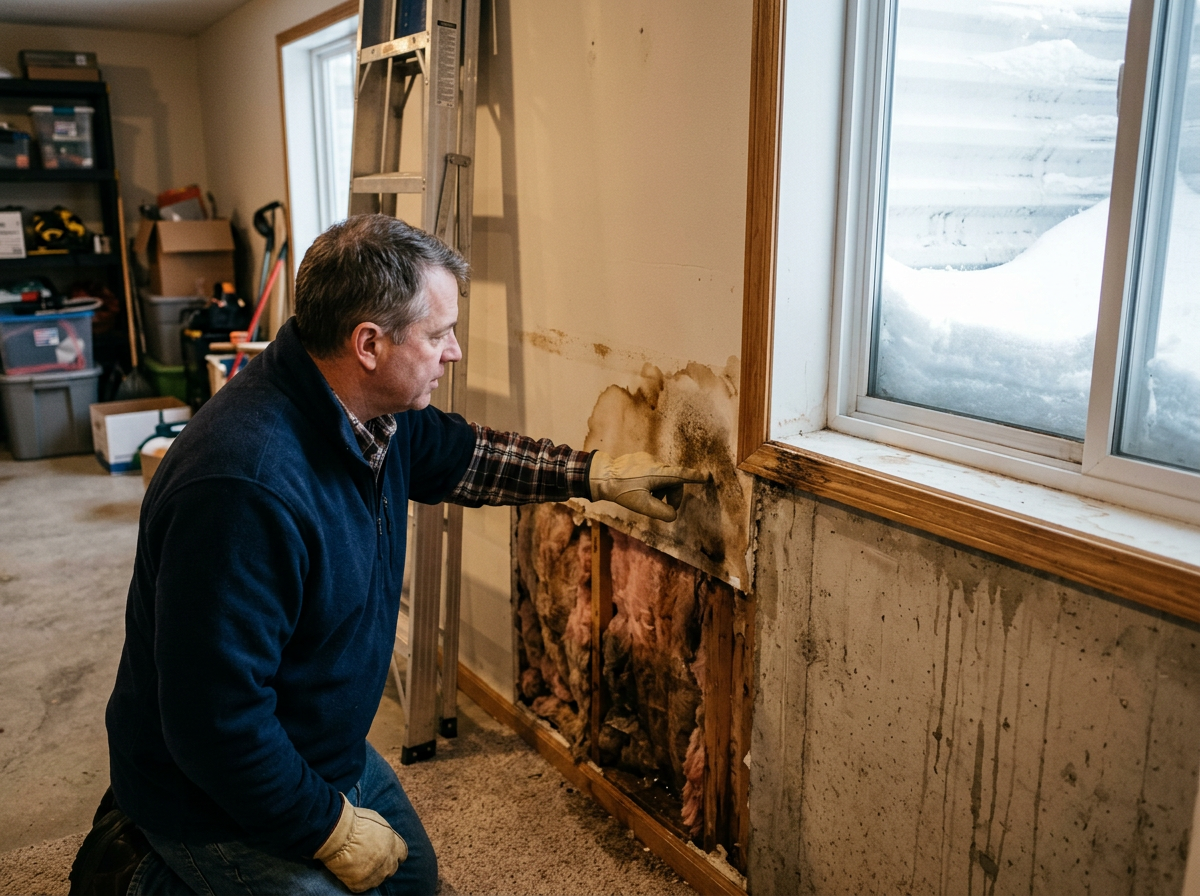
When frost depths reach 42-60 inches and daytime highs climb above freezing while nights stay below, ice dams form along roof edges and force water under shingles into wall cavities that later appear as damp spots in basements. Homeowners should first examine rooflines for thick ice ridges, look for water stains on upper interior walls, and check basement poured or block walls for moisture lines starting several feet above the slab.
How Ice Dams Route Water Into Wall Cavities
Ice dams develop when heat escaping from the house melts snow on the upper roof while the eaves remain frozen. The resulting water backs up under shingles and finds gaps in flashing or siding, then travels down sheathing and framing until it reaches the basement. In older Minneapolis and Saint Paul homes with combined sewers, this water can mix with other sources and complicate insurance claims that distinguish groundwater seepage from sudden loss. Heavy clay soils around foundations slow drainage and keep the lower wall sections wet longer, often requiring 5-10 days of dehumidification at 40-50 percent relative humidity before moisture readings stabilize.
Roof and Attic Checks After a Melt Event
Walk the perimeter and look for ice buildup thicker than 4-6 inches along gutters or valleys. Inside the attic, scan insulation for compressed or discolored areas near the eaves where meltwater has soaked through. Check for daylight visible through roof deck boards and feel for soft spots in sheathing. Attic ventilation that stays blocked by insulation or debris allows warm air to pool and worsen the cycle. These observations help determine whether water reached the wall cavities rather than simply running off the roof.
Foundation Wall Inspection Points
Start at the top of the basement walls and work downward, noting any efflorescence or dark staining on block mortar joints versus hairline cracks in poured concrete. Block foundations tend to leak at the seams first, while poured walls often show water at cold joints or where utility penetrations exist. Measure damp areas from the floor upward; intrusion above 24 inches usually points to roof or wall-cavity sources rather than floor-level seepage. Use a moisture meter on both interior and exterior sides if accessible, and compare readings on north-facing walls where ice dams persist longest.
Related Freezing Issues That Compound the Problem
Sump discharge lines that freeze at the outlet can back up and push water against the same walls already stressed by ice-dam melt. See our guide on sump pump discharge lines freezing in Minnesota winters for details on locating and thawing those lines. Older block foundations also behave differently from poured ones when extra water arrives; read block versus poured foundations to understand the typical failure patterns in Twin Cities homes.
Drying Timeline and Humidity Targets
Once visible water is removed, wall cavities behind baseboards and drywall need airflow and dehumidification for 7-14 days depending on material thickness. Keep indoor relative humidity between 40-50 percent and monitor wood moisture content until it drops below 12 percent. Fans directed into cavities through small access holes speed evaporation without removing large sections of drywall. If readings remain elevated after two weeks, hidden insulation or sheathing may still hold water and require targeted removal.
When Professional Water Extraction Helps
For widespread wall saturation or when water has reached insulation and subflooring, water damage restoration teams use extraction wands and drying mats sized for Minnesota clay-soil basements. These crews document moisture levels for insurance and prevent mold growth that can begin within 48-72 hours in wall cavities. Homeowners retain control over the scope and can request written moisture maps before any demolition begins.