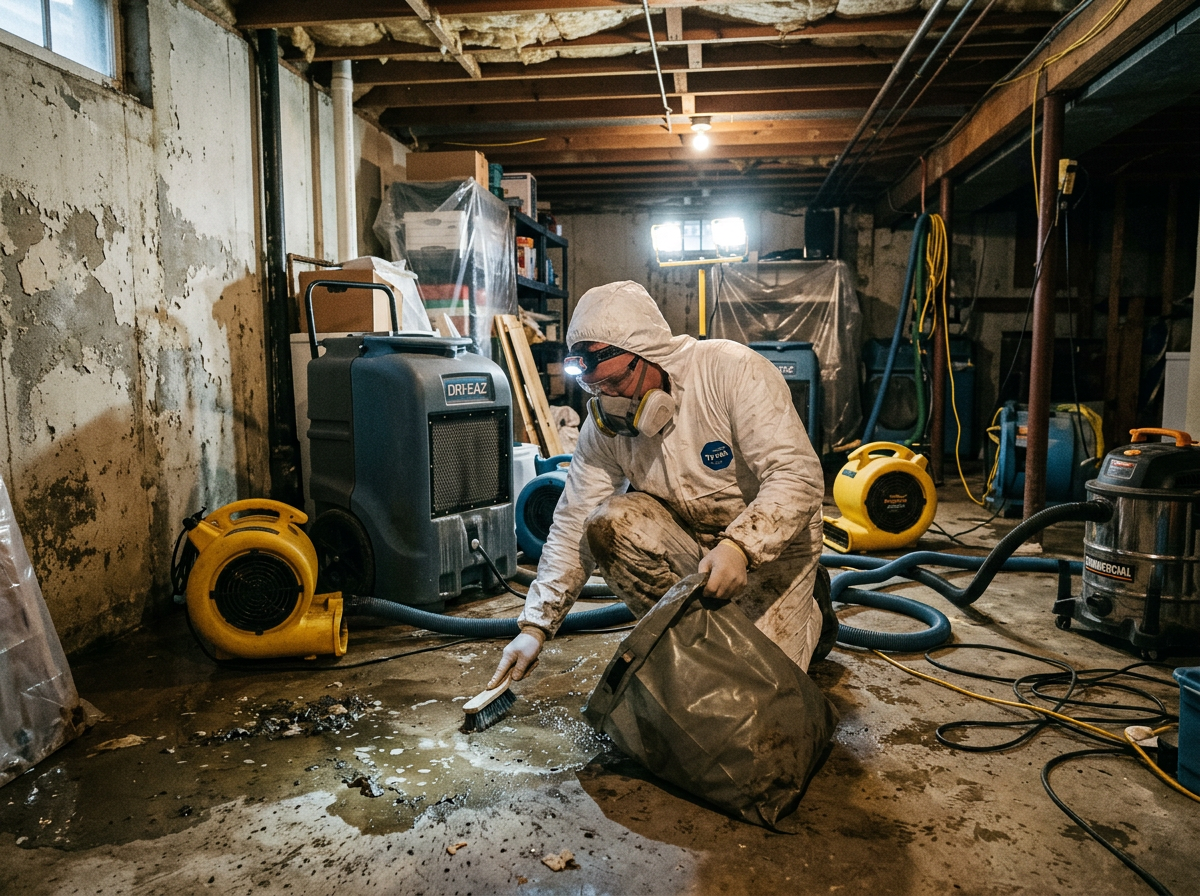
Sewage backups in Minneapolis are typically category 3 black water carrying pathogens from combined storm and sanitary sewers that overflow during heavy rain in pre-1940 stone and clay tile foundations. These jobs require full PPE, negative air machines and antimicrobial application before any extraction begins. Technicians must meter moisture in walls and floors immediately because clay soils hold water against foundations and hidden saturation can lead to mould within 48 hours if drying targets are missed.
Extraction starts with truck-mounted units to remove standing water, followed by removal of affected porous materials such as carpet pad, baseboards and drywall below the flood line. Moisture meters guide cuts to ensure readings return to ambient levels, usually 10-12 percent in wood framing. Non-porous items like tile or sealed concrete can often be cleaned and salvaged, while insulation, subfloor sections and cabinetry in contact with sewage must be discarded to prevent cross-contamination.
Drying relies on air movers and dehumidifiers running until relative humidity stays below 50 percent and all surfaces test dry. Documentation includes pre-job photos, moisture logs and a chain-of-custody list for discarded items, all required for insurance claims in combined-sewer areas. Homeowners should avoid entering the space until clearance testing confirms safe conditions.
Safety protocols include sealing HVAC returns to stop aerosol spread and using HEPA filtration throughout the process. In Minneapolis, spring snowmelt on frozen ground often triggers these events in March and April, so crews prioritize rapid response before temperatures rise and bacterial growth accelerates.
Technician insight
In Minneapolis the thing that catches most people out with Sewage Backup Cleanup is how quickly meltwater from still-frozen yards pushes into combined sewers around older stone foundations in March, saturating hollow clay tile walls that look dry on the surface until you open them.
South Minneapolis basement after April rain
Heavy rain overwhelmed the combined sewer on a pre-1940 block, sending sewage into a finished basement. Crews extracted water, removed saturated carpet and lower drywall sections, then dried the stone foundation walls over four days. Final moisture readings met targets and the homeowner received complete photo and disposal logs for the claim.
Sewage Backup Cleanup Services We Offer
✓Category 3 Black Water Extraction
Removes standing sewage from basements using truck-mounted pumps while containing aerosols to protect the rest of the home.
✓Contaminated Drywall and Insulation Removal
Cuts and disposes of water-damaged drywall and insulation below the contamination line to eliminate hidden mould risk.
✓Sewage Affected Flooring Disposal
Extracts and hauls away carpet, pad and laminate that cannot be salvaged after category 3 exposure.
✓Antimicrobial Treatment and Fogging
Applies EPA-registered antimicrobials to remaining surfaces and air spaces to reduce pathogen load.
✓Moisture Mapping and Drying
Uses meters and sensors to locate hidden moisture in older Minneapolis foundation walls then dries to industry targets.
✓Sump Pump Discharge Line Inspection
Checks and clears frozen or blocked discharge lines that commonly cause backups during spring thaw.
Sewage Backup Cleanup Cost in Minnesota
| Service | Typical Range | What Affects It |
|---|---|---|
| Small area sewage extraction and drying | $1,800–$3,200 | Limited to one room in newer poured-wall homes |
| Full basement sewage cleanup | $4,500–$8,500 | Older Minneapolis homes with combined sewers and multiple affected materials |
| Additional wall and insulation removal | $1,200–$2,800 | Depends on linear feet of pre-1940 stone or block walls |
| Emergency after-hours response | No extra charge | 24-hour service included for all calls |
Ranges are typical for Minnesota and confirmed with an exact written quote before any work starts.
How it works
- 1
Site Assessment And Containment
Technicians arrive, set up containment barriers and document the extent of contamination before any work begins.
- 2
Water Extraction
Standing sewage is pumped out with truck-mounted equipment to lower water levels quickly.
- 3
Material Removal
Affected porous materials are cut out and bagged for disposal following moisture meter readings.
- 4
Cleaning And Antimicrobial Application
Remaining surfaces are cleaned then treated to reduce bacteria and mould potential.
- 5
Drying And Clearance
Equipment runs until all surfaces test dry and final documentation is prepared for the homeowner.
Pricing
Pricing varies by home age, extent of contamination and amount of material that must be removed.