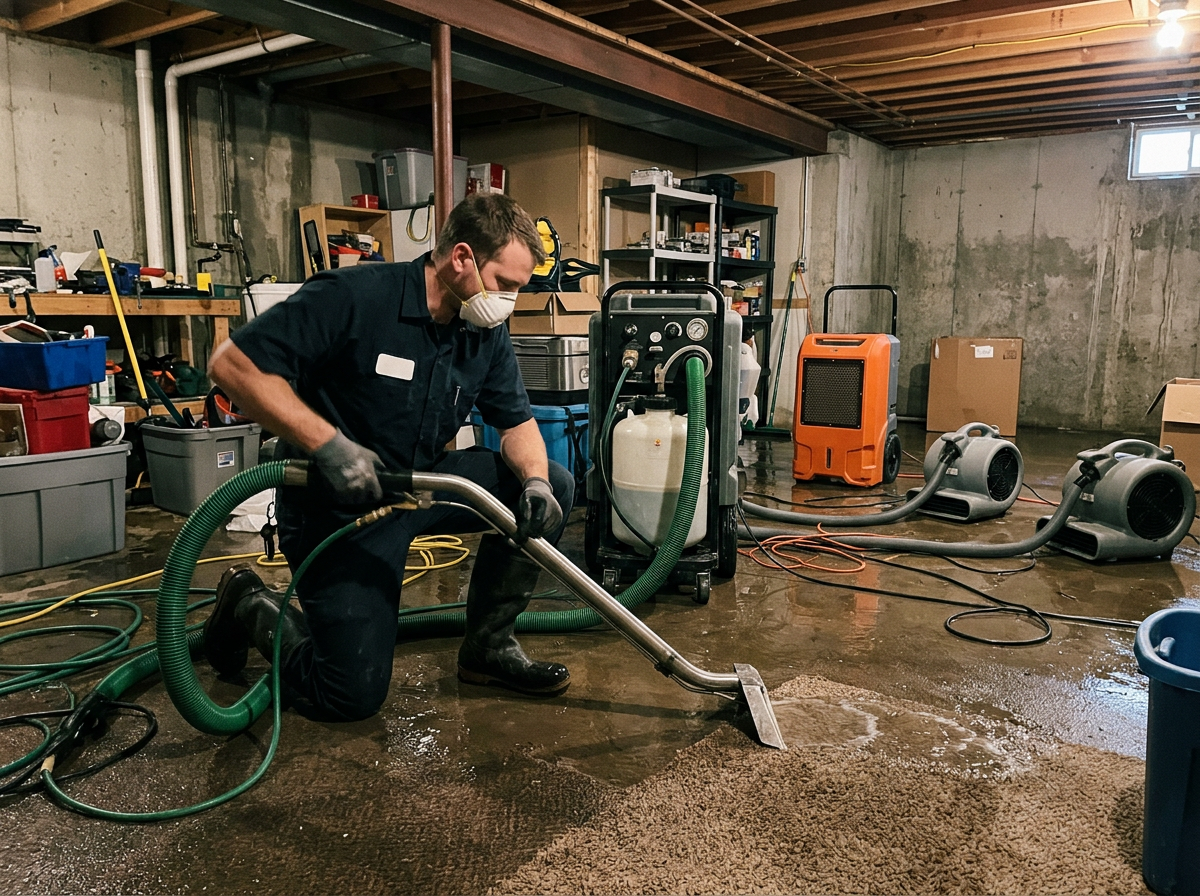
Minneapolis basements commonly see Category 2 or 3 water from combined storm and sanitary sewers during heavy rain or from spring snowmelt running off frozen ground into clay soils. Category 1 clean water from a burst supply line permits faster salvage of some materials, while gray and black water requires full containment, PPE protocols, and disposal to limit bacterial and chemical exposure. Extraction begins with pumps for bulk removal followed by truck-mounted or portable extractors that pull water from carpet, pad, and subfloor cavities.
Technicians use penetrating and non-penetrating moisture meters plus infrared imaging to map saturation beyond visible water lines, then set drying targets below 15 percent moisture content for wood and 1 percent above ambient for concrete slabs. Open-cell insulation and saturated drywall below the water line are cut out and discarded; hardwood flooring may be saved if lifted and dried within 48 hours, but particleboard subfloors are almost always removed. The 24-to-48-hour mold window drives the pace once extraction finishes.
Safety steps include shutting off electrical circuits in wet zones, ventilating sewer gases, and containing any asbestos-containing materials common in pre-1978 Minneapolis homes. Every job produces a moisture log, photo documentation of affected areas, and extraction volumes that homeowners can forward directly to insurers. Work stops only after meters confirm the structure has returned to equilibrium moisture levels.
Sump pump discharge lines that freeze solid in winter often cause the very backups we extract; technicians check these lines and recommend rerouting above the frost line to reduce repeat calls during March and April snowmelt events.
Technician insight
In Minneapolis, the thing that catches most people out with Water Extraction is spring snowmelt on still-frozen ground pushing water straight into footings below the 42-to-60-inch frost line; homeowners wait until they see puddles on the slab, but by then the heavy clay has already wicked moisture up into hollow-core concrete block walls from the 1950s and 60s.
South Minneapolis Stone Foundation
March snowmelt ran off frozen ground into a 1928 stone foundation on the south side. Extraction pulled Category 2 water from the clay soil pocket at the footing; meters showed saturation in the lower three courses of block. We removed the wet insulation, dried the cavities, and left the home below target moisture levels before mold growth began.
Water Extraction Services We Offer
✓Category 3 Sewage Extraction
Removes contaminated floodwater from combined sewer backups common in older Minneapolis and Saint Paul neighborhoods with full containment and disposal.
✓Spring Snowmelt Extraction
Addresses water forced against foundations by frozen ground and clay soils during March and April melt events before it reaches finished areas.
✓Sump Pump Backup Extraction
Clears water that re-enters basements when discharge lines freeze or when pumps fail during heavy runoff against pre-1940 stone and clay tile walls.
✓Carpet and Pad Water Removal
Extracts water from flooring assemblies using weighted extractors to pull moisture from pad and subfloor without unnecessary demolition.
✓Moisture Mapping and Metering
Uses infrared and pin meters to locate hidden saturation in walls and slabs so only affected materials are removed.
✓Post-Extraction Containment Setup
Installs temporary barriers and negative air to isolate wet zones while drying equipment runs in occupied Minneapolis homes.
Water Extraction Cost in Minnesota
| Service | Typical Range | What Affects It |
|---|---|---|
| Category 1 Water Extraction | $400–$900 | Varies with square footage and whether pad must be removed |
| Category 2 Or 3 Extraction | $800–$2,200 | Higher when sewage or sediment requires extra disposal steps |
| Moisture Mapping Add-On | $150–$350 | Includes infrared scan and written report for insurance |
| Equipment Rental Per Day | $75–$150 | Air movers and dehumidifiers after extraction completes |
Ranges are typical for Minnesota and confirmed with an exact written quote before any work starts.
How it works
- 1
On-Site Assessment
Technician arrives within hours, identifies water category, measures affected square footage, and notes foundation type and any sewer involvement.
- 2
Bulk Water Removal
Pumps and extractors remove standing water from floors and cavities, with volumes recorded for insurance documentation.
- 3
Targeted Extraction
Weighted tools pull remaining moisture from carpet, pad, and porous materials while meters guide cut-out decisions.
- 4
Drying Verification
Daily moisture readings continue until targets are met; logs and photos are compiled for the claim file.
- 5
Final Walk-Through
Homeowner reviews dried areas and receives recommendations for preventing repeat intrusion from clay soils or frozen discharge lines.
Pricing
Pricing depends on water category, volume, and access; we provide a written scope after inspection.